This article contains affiliate links. We may earn a commission when you buy through our links, at no extra cost to you.
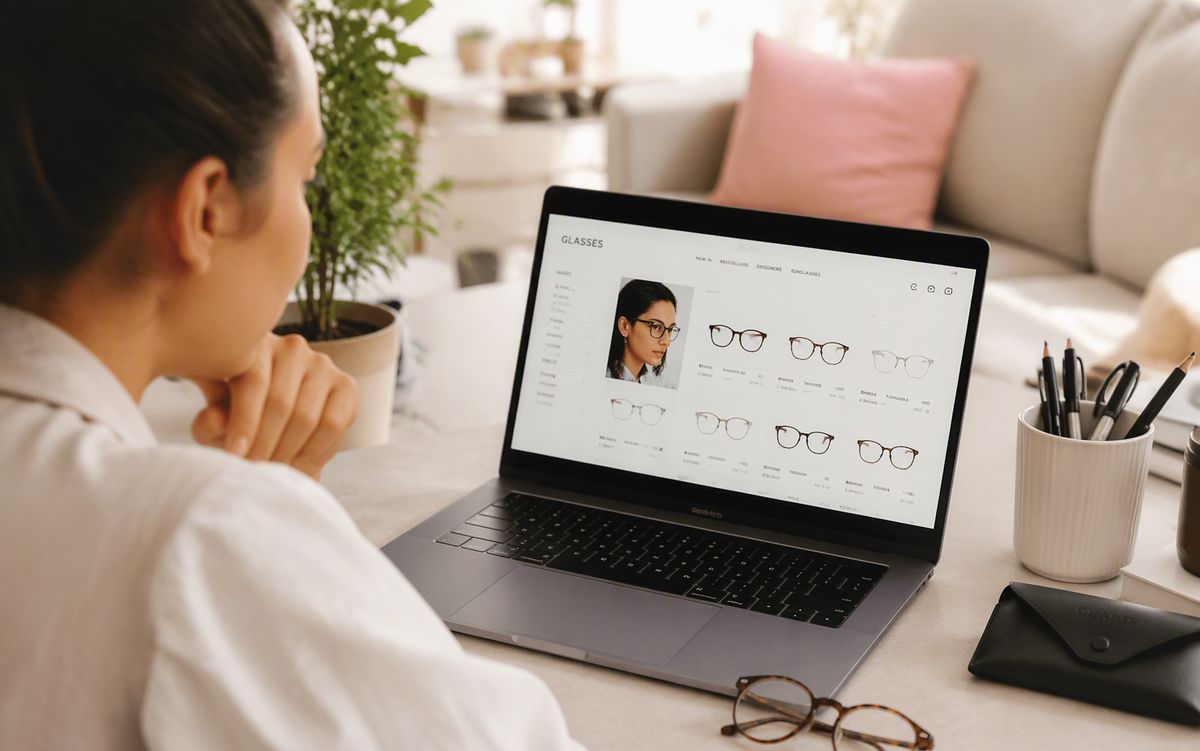
Here’s a confession from us: we spend our days looking at eyewear purchase data — millions of real orders — and the single biggest pattern we see isn’t about price or brand. It’s hesitation. First-time online buyers sit on their carts for days because one question won’t go away: what if they don’t fit?
If that’s you, relax. Industry surveys show roughly 85% of American shoppers are now willing to buy glasses online, and about one in five already has. The process is genuinely solved — as long as you do the steps in the right order. This guide walks you through that order: prepare → frames → lenses → where to buy → avoid the traps. No marketing fluff, just the process, informed by what actually goes wrong in real orders.

Step 1: Before You Shop, Gather Three Things
Ten minutes of prep turns a confusing afternoon into a 20-minute checkout.
Your prescription. It needs to be current — most states consider prescriptions valid for one to two years. If yours is older, book an eye exam first. One important note: questions about your specific eyes belong with your eye doctor, not with any website, ours included. We sell information about shopping, not medical advice.
Your PD (pupillary distance). This is the distance between your pupils, and online retailers need it to center your lenses. It’s sometimes printed on your prescription. If not, call your eye doctor’s office — they have it on file and will usually tell you over the phone in thirty seconds. (A step-by-step guide to measuring PD at home is coming soon.)
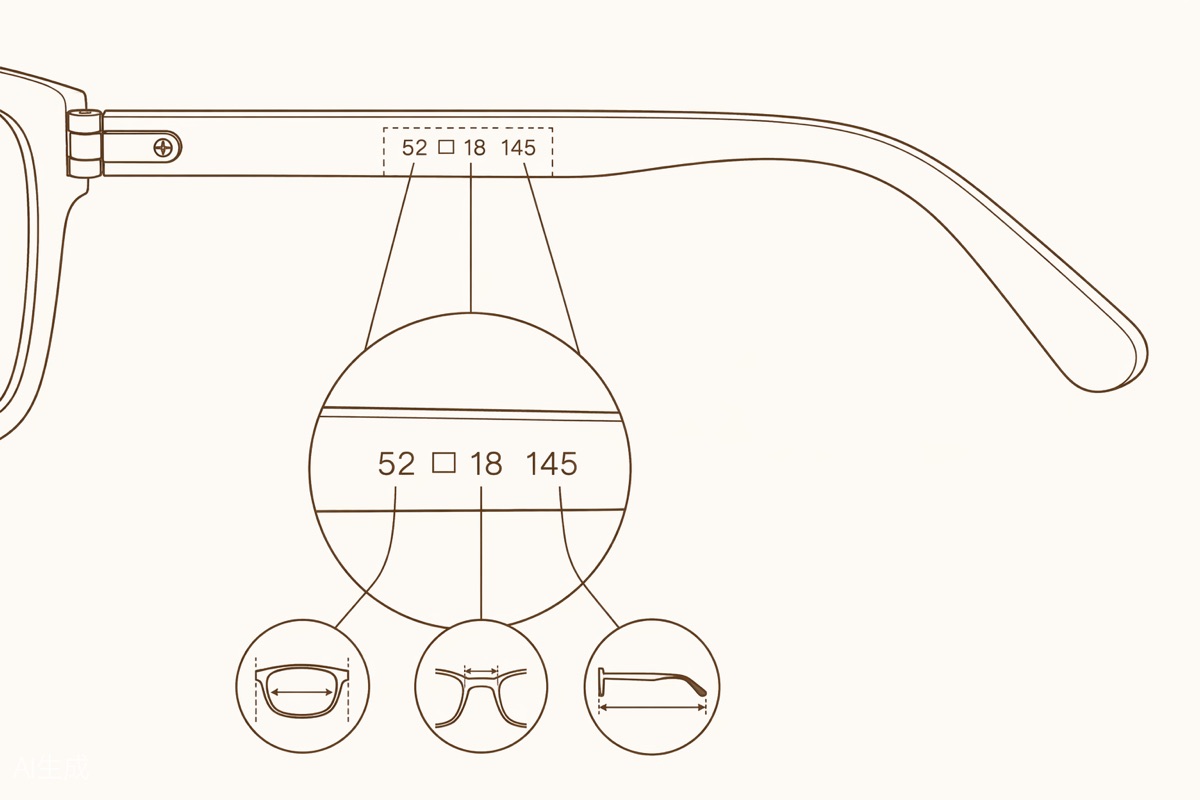
Your frame numbers. Flip your current glasses over and look at the inside of the temple arm. See three numbers like 52□18-140? That’s lens width, bridge, and temple length. Write them down. They are your personal sizing cheat code — the single most useful thing you can bring to online shopping.
Step 2: Choosing Frames — Size First, Style Second
This is where first-timers blow it, and we can see it in return data: people fall for a style, ignore the measurements, and the frames arrive pinching their temples or sliding down their nose.
Start with size. Take the numbers from your old pair and stay within a millimeter or two. Wider face? Go a few millimeters up. Narrow face? Down. Get this right and almost any style will work.
Then think about shape. The classic rule is contrast: round faces pair well with angular frames, square faces soften with rounder ones, ovals can wear almost anything, and heart-shaped faces balance nicely with bottom-heavy styles. Treat these as starting points, not laws — confidence outranks geometry.
Use virtual try-on, but don’t worship it. About 29% of glasses shoppers have now used AR try-on tools, and they’re genuinely helpful for eliminating duds. But lighting, camera angle, and lens distortion can all lie to you. Use try-on to build a shortlist of two or three finalists — then let the return policy make the final call. More on that in Step 4.
Step 3: Lenses — Simpler Than They Look
Retail sites will throw a wall of lens options at you. Most buyers only need to make three decisions.
Single vision or progressive? Single vision corrects one range — distance or reading — and covers most buyers under 40. Progressives blend distance, intermediate, and near into one lens with no visible line. If you catch yourself holding your phone at arm’s length to read, that’s the progressive conversation — have it with your eye doctor first.
Blue light filtering? If your workday is a wall of monitors, blue light filtering lenses are designed to filter a portion of the blue light screens emit. It’s a modest, popular add-on — worth considering for heavy screen users, not a medical necessity.
Lens thickness (index)? Here’s the simple version: stronger prescriptions and bigger frames look better in thinner, higher-index lenses. Mild prescriptions in smaller frames do fine with standard index and save you money.
Step 4: Where to Buy — the Four Things That Actually Matter
Every online glasses store looks the same on the surface. These four dimensions separate them.
Price range. Complete pairs run from under $10 to $150+. Budget retailers have proven cheap doesn’t mean flimsy; mid-range brands buy you more style variety and lens options. Set your budget first, then compare within it.
Return and fit policy. This is the big one — the single most important line on the entire website. Look for at least a 30-day return window, free remakes, or home try-on. A generous policy is what turns online buying from a gamble into a sure thing. Read it before you order.
Prescription upload flow. Good retailers make entering your prescription nearly idiot-proof: guided forms, photo upload, even “send it later” options. Clunky here often means clunky everywhere.
Insurance and FSA/HSA. Many retailers take FSA/HSA cards directly, and most provide itemized receipts for insurance reimbursement. Details live on the payment or FAQ page.
One disclosure worth repeating: we earn commissions through affiliate links with some retailers below. Our comparison criteria apply to every store equally, linked or not — that’s the only way this guide is worth reading.
Our Picks for First-Time Buyers
EyeBuyDirect — best for style-conscious professionals. Huge selection of current styles, deep lens customization including blue light bundles, transparent pricing. Expect roughly $50–$120 for a complete pair depending on choices. If you want quality and no surprises, start here. Shop EyeBuyDirect — link coming soon We may earn a commission.
Zenni Optical — best for tight budgets. The original extreme-value player, with complete pairs starting under $15. Styles lean basic, but at these prices a backup pair costs less than lunch. Most configurations land between $10–$50. Hard budget? First stop. Shop Zenni Optical — link coming soon We may earn a commission.
GlassesUSA — best for deal hunters. Discount-driven, mixing house frames with designer names and running aggressive promotions year-round. Typical range $40–$100. If you enjoy coupon stacking, this is your playground. Shop GlassesUSA — link coming soon We may earn a commission.
Also worth a look: Warby Parker, which invented home try-on and sells curated styles around $95–$150. If brand experience matters as much as price, browse them alongside the picks above.
Prices are typical ranges as of publication; actual prices and policies are subject to each retailer’s current terms.
FAQ
Is it safe to buy glasses online? Yes, with one condition: buy from retailers with clear return policies. The process itself is mature — the policy is your safety net.
Can I use insurance or FSA? Usually. Many stores accept FSA/HSA at checkout, and most provide receipts for reimbursement. Confirm on the payment page.
What if my glasses don’t fit? Use the return window — most major retailers offer 30 days for returns, exchanges, or a remake. This is why Step 4 matters more than Step 2.
How long does shipping take? Depends on your lenses. Standard single vision ships fastest; progressives and specialty coatings take longer. Every retailer quotes an estimate at checkout.
The Bottom Line
Four steps, in order: gather your prescription, PD, and frame numbers → choose frames by size first, style second → pick lenses for how you actually live → buy where the return policy lets you shop fearlessly.
The hesitation we talked about at the start? It disappears the moment you realize the worst case is a return label. Start with the boring homework — that prescription and PD — and the rest is honestly easy.
Get the 2026 Glasses Buying Checklist — plus one weekly deals roundup in your inbox. One email a week, unsubscribe anytime.
Ready to compare prices? See this week’s top eyewear deals →